Introduction
The excitement of business growth often comes with an unexpected challenge: fulfillment becomes increasingly complex and time-consuming as order volumes scale. What started as a simple process of packing orders from your garage or spare room suddenly demands dedicated warehouse space, staff management, and sophisticated inventory systems. For growing brands experiencing this growing pain, Third-Party Logistics (3PL) fulfillment presents a compelling solution that can transform operational chaos into streamlined efficiency.
Understanding 3PL Fulfillment
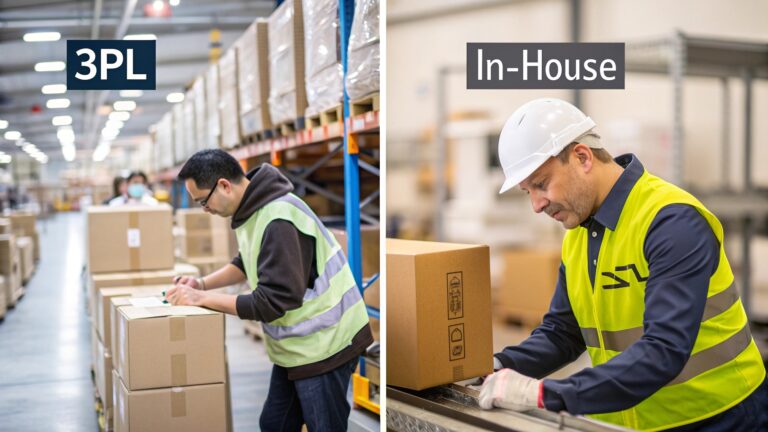
Third-Party Logistics, commonly abbreviated as 3PL, refers to outsourcing logistics and distribution activities to specialized service providers. Unlike first-party logistics (1PL) where companies handle everything internally, or second-party logistics (2PL) involving basic transportation services, 3PL providers offer comprehensive fulfillment solutions that encompass warehousing, inventory management, order processing, and shipping.
The core services of 3PL providers include secure inventory storage in professional warehouse facilities, automated order processing systems that integrate with your sales channels, efficient pick-pack-ship operations handled by trained staff, and comprehensive returns management. These providers leverage economies of scale, advanced technology, and logistics expertise to deliver services that would be expensive and complex for individual businesses to replicate.
3PL providers range from asset-based companies that own warehouses and transportation fleets to non-asset-based firms that coordinate services through partner networks. Some specialize in specific industries like fashion or electronics, while others offer generalist services across multiple sectors. The choice between regional, national, or international providers depends on your geographic reach and expansion plans.
How 3PL Fulfillment Works
The 3PL fulfillment process begins when your inventory arrives at the provider’s warehouse facility. Professional receiving teams inspect, count, and store products according to optimized warehouse layouts designed for efficient picking. When customers place orders through your website or sales channels, order information automatically transmits to the 3PL’s warehouse management system (WMS) via electronic data interchange (EDI) or API connections.
Warehouse staff receive picking instructions and gather products from storage locations, following quality control procedures to ensure accuracy. Items are then professionally packed using appropriate materials and branded packaging if specified, before being labeled and dispatched through the most cost-effective shipping carriers based on destination, speed requirements, and cost considerations.
Technology integration forms the backbone of effective 3PL operations. Modern providers offer real-time inventory tracking, automated reorder notifications, and comprehensive reporting dashboards that provide visibility into stock levels, order status, and performance metrics. This technological sophistication allows seamless integration with popular ecommerce platforms like Shopify, WooCommerce, and Amazon, creating automated workflows that reduce manual intervention and errors.
Benefits of 3PL Fulfillment for Growing Brands
Cost savings represent one of the most compelling advantages of 3PL fulfillment. Rather than investing in warehouse leases, equipment, and staff, businesses pay only for services used, converting fixed costs into variable expenses that scale with sales volume. 3PL providers negotiate better shipping rates through volume discounts with major carriers, passing savings to clients while maintaining service quality.
Scalability and flexibility become crucial as businesses grow. 3PL providers can accommodate seasonal demand spikes without requiring long-term capacity commitments. Geographic expansion becomes feasible through providers’ multiple warehouse locations, enabling faster delivery to new markets without significant infrastructure investment. This flexibility extends to product diversification, as established 3PL operations can handle new product lines without additional setup complexity.
Perhaps most importantly, partnering with a 3PL provider allows business owners to focus on core activities like product development, marketing, and customer acquisition. Instead of managing warehouse operations, inventory levels, and shipping logistics, founders can allocate time and resources to activities that directly drive growth and profitability.
Enhanced customer experience often results from professional 3PL operations. Faster processing times, accurate order fulfillment, and professional packaging create positive impressions that build customer loyalty. Many 3PL providers offer expedited shipping options and extended customer service capabilities that small businesses couldn’t provide independently.
When to Consider 3PL Services
Several indicators suggest it’s time to consider 3PL fulfillment. Order volume typically represents the primary trigger—most experts recommend evaluating 3PL options when consistently processing 100+ orders monthly. However, volume alone doesn’t tell the complete story. Storage space limitations, rising shipping costs, and time management challenges all signal potential benefits from outsourcing fulfillment.
Product characteristics significantly influence 3PL suitability. Bulky, heavy, or fragile items often benefit from professional handling and specialized packaging expertise. Seasonal businesses appreciate the ability to scale capacity without year-round overhead commitments. Companies experiencing geographic expansion find 3PL providers’ multiple warehouse locations invaluable for maintaining delivery speed while controlling costs.
Conducting an honest assessment of internal capabilities helps determine 3PL readiness. Calculate current fulfillment costs including space, labor, packaging materials, and shipping expenses. Compare these costs with 3PL pricing while factoring in time savings and growth potential. Many businesses discover that 3PL services cost less than comprehensive internal operations while delivering superior performance.
Choosing the Right 3PL Partner
Selecting the appropriate 3PL provider requires careful evaluation of multiple factors. Geographic coverage and warehouse locations directly impact shipping speed and costs to your customer base. Technology capabilities and integration options determine operational efficiency and visibility into your fulfillment operations.
Industry experience matters significantly. Providers familiar with your product category understand specific handling requirements, regulatory considerations, and customer expectations. Fashion brands need providers experienced with seasonal inventory fluctuations and size/color complexity, while electronics companies require expertise in fragile item handling and warranty management.
Due diligence should include facility tours to assess cleanliness, organization, and technology infrastructure. Request client references and speak directly with current customers about their experiences. Evaluate the provider’s financial stability and insurance coverage to ensure long-term partnership viability and protection against potential losses.
Contract terms deserve careful attention. Service level agreements should specify performance standards for accuracy, speed, and customer service. Pricing models vary significantly—some providers charge per-order fees while others use storage-based pricing or hybrid approaches. Understand all potential charges including setup fees, special handling costs, and return processing expenses to avoid surprises.
3PL Pricing Models and Cost Considerations
3PL pricing structures typically combine multiple fee components. Per-order fulfillment fees cover pick, pack, and ship activities, often ranging from $2-8 depending on complexity. Storage costs are usually calculated per cubic foot or pallet space occupied monthly. Additional charges may apply for receiving inventory, special packaging requirements, and return processing.
Hidden costs can significantly impact total expenses. Some providers charge for system integrations, account management, or detailed reporting. Special handling fees for oversized items, fragile products, or custom packaging can add substantial costs. Return processing, quality control inspections, and customer service support may incur separate charges.
Compare total cost of ownership rather than focusing solely on per-order fees. Calculate break-even volumes where 3PL costs equal internal fulfillment expenses, considering all direct and indirect costs including opportunity costs of management time. Most businesses find break-even points between 50-200 orders monthly, though this varies based on product characteristics and operational efficiency.
Implementation and Common Challenges
Successful 3PL implementation requires careful planning and realistic timeline expectations. Initial consultation and needs assessment typically take 1-2 weeks, followed by system integration and testing phases lasting 2-4 weeks. Inventory transfer and setup add another 1-2 weeks, making total implementation timelines of 4-8 weeks common.
Technology integration represents the most complex implementation aspect. Ensure your ecommerce platform can connect with the 3PL’s systems through APIs or EDI connections. Test all integration points thoroughly before transferring inventory to avoid order processing disruptions during the transition.
Common challenges include inventory discrepancies during transfer, temporary order processing delays during system cutover, and communication gaps between internal teams and 3PL staff. Mitigate these issues through detailed pre-implementation planning, comprehensive testing, and clear communication protocols with all stakeholders.
Future Trends and Alternatives
The 3PL industry continues evolving with technological advancement and changing customer expectations. Automation and robotics are increasing efficiency while reducing costs. Artificial intelligence optimizes inventory placement and picking routes. Sustainability initiatives are driving green logistics practices including carbon-neutral shipping options.
Alternative fulfillment models deserve consideration based on business characteristics. Dropshipping eliminates inventory investment but reduces control over customer experience and profit margins. Amazon FBA provides access to Prime shipping benefits but creates dependency on a single platform. Hybrid approaches combining multiple fulfillment methods can optimize cost and service based on specific product lines or customer segments.
Making the Decision
3PL fulfillment represents a strategic decision that can significantly impact business growth and operational efficiency. For brands consistently processing 100+ monthly orders, experiencing storage constraints, or planning geographic expansion, 3PL services often provide compelling advantages in cost, scalability, and customer experience.
Success requires careful provider selection based on geographic coverage, technology capabilities, industry experience, and cultural fit. Transparent pricing models, clear service level agreements, and robust integration capabilities form the foundation of effective partnerships.
The transition to 3PL fulfillment marks an important milestone in business growth—the point where operational complexity justifies professional logistics management. By outsourcing fulfillment to experts, growing brands can focus resources on core competencies while delivering professional customer experiences that support continued growth and success.