In today’s ecommerce-driven economy, fulfillment isn’t just a logistical necessity—it’s a competitive differentiator. From the moment a customer places an order to the final delivery at their doorstep, every touchpoint influences satisfaction, loyalty, and brand perception. As businesses scale, the pressure to deliver faster, cheaper, and more accurately intensifies. That’s why choosing the right fulfillment model is more than an operational decision—it’s a strategic one that directly impacts your bottom line.
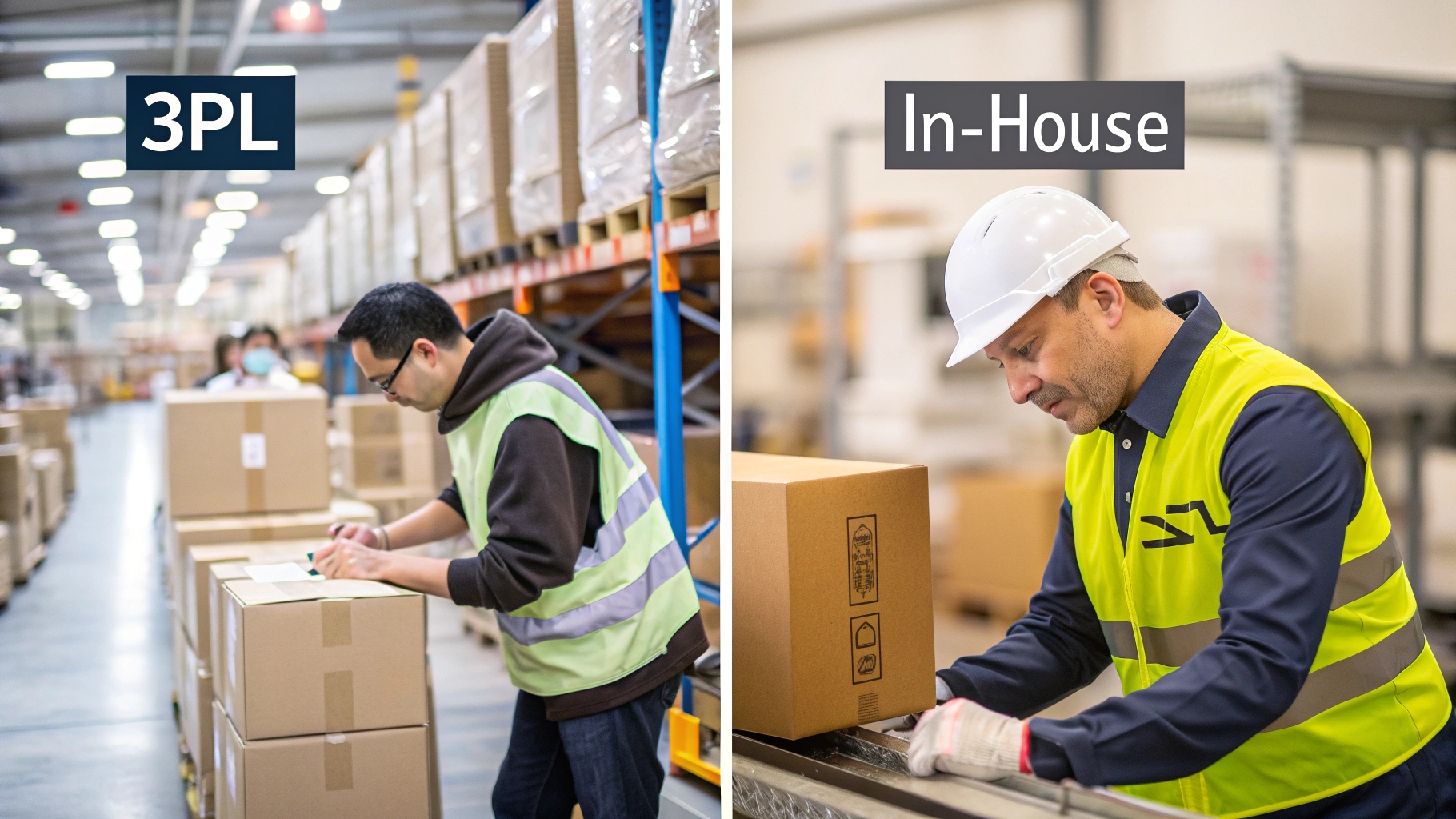
For many brands, the debate centers around two core models: in-house fulfillment versus third-party logistics (3PL). In-house fulfillment offers control and customization, while 3PL promises scalability and efficiency. But which model truly delivers better ROI? The answer depends on your business goals, infrastructure, and appetite for complexity. Understanding the nuances of each approach is key to making an informed, growth-focused decision.
This blog dives deep into the pros, cons, and ROI implications of both models, and introduces ASC Fulfillment USA—a high-touch 3PL provider that’s redefining what outsourced logistics can deliver.
Introduction: Why Fulfillment Strategy Matters
Fulfillment is the heartbeat of ecommerce. It’s the bridge between a customer clicking “buy” and receiving their order on time, in perfect condition. But behind that seamless experience lies a complex web of inventory management, order processing, packaging, shipping, and returns.
For many businesses, especially those experiencing growth, fulfillment becomes a bottleneck. The question then arises: should you build and manage your own fulfillment infrastructure, or partner with a 3PL?
The answer isn’t one-size-fits-all. It depends on your business model, order volume, growth trajectory, and operational priorities. But one thing is clear—your fulfillment strategy directly affects your ROI.
What Is In-House Fulfillment?
In-house fulfillment refers to managing all logistics operations internally. This includes owning or leasing warehouse space, hiring staff, investing in technology, and handling every aspect of the order lifecycle.
✅ Pros of In-House Fulfillment
- Full Control: You oversee every detail—from inventory placement to packaging aesthetics.
- Brand Experience: Custom packaging, inserts, and messaging can be tightly aligned with your brand.
- Flexibility: You can pivot quickly, test new workflows, and adapt to changing customer needs.
❌ Cons of In-House Fulfillment
- High Overhead: Warehousing, labor, equipment, and software costs add up quickly.
- Scalability Challenges: Seasonal spikes or sudden growth can overwhelm internal systems.
- Operational Complexity: Managing logistics requires expertise, time, and constant optimization.
- Technology Investment: To compete with modern fulfillment standards, you’ll need robust systems for inventory, shipping, and analytics.
In-house fulfillment can work well for niche brands with specialized needs or those prioritizing complete control. But for most businesses, especially those scaling fast, the costs and complexity can erode ROI.
What Is 3PL Fulfillment?
Third-party logistics (3PL) providers offer outsourced fulfillment services. They store your inventory, pick and pack orders, ship products, and often handle returns. Leading 3PLs also provide technology platforms for real-time tracking, analytics, and integration with ecommerce systems.
✅ Pros of 3PL Fulfillment
- Cost Efficiency: You pay for what you use—no need to invest in warehouses or staff.
- Scalability: Easily ramp up during peak seasons or expand into new markets.
- Expertise: Benefit from logistics professionals and optimized workflows.
- Speed: Faster shipping through established carrier relationships and strategic warehouse locations.
- Technology: Access to advanced systems without the upfront investment.
❌ Cons of 3PL Fulfillment
- Less Control: You rely on your partner’s processes and performance.
- Communication Gaps: Misalignment can lead to delays or errors.
- Brand Differentiation: Custom packaging and messaging may be limited.
Despite these trade-offs, many businesses find that the benefits of 3PL—especially in terms of cost, speed, and scalability—far outweigh the drawbacks.
ROI Comparison: Key Metrics to Evaluate
When evaluating fulfillment models, ROI isn’t just about cost—it’s about value. Here are the key metrics to consider:
💰 Cost Per Order
This is the most direct metric, but it’s often misunderstood. In-house fulfillment may appear cheaper at scale, but hidden costs—like labor, equipment maintenance, and warehouse leasing—can erode margins. 3PLs typically offer variable pricing based on volume, which means you only pay for what you use. Their bulk shipping discounts and automated systems often result in lower per-order costs, especially during peak seasons.
🚚 Delivery Speed and Accuracy
Fast, error-free delivery isn’t just a customer expectation—it’s a retention driver. In-house teams may struggle to match the speed and precision of 3PLs, which leverage optimized warehouse layouts, automation, and carrier relationships.
📦 Scalability and Flexibilit
Growth is unpredictable. Seasonal spikes, flash sales, or viral campaigns can overwhelm in-house systems. Scaling internally means hiring, training, and expanding infrastructure—often at great expense. 3PLs like ASC offer elastic capacity, allowing you to scale up or down without operational disruption. This agility translates directly into ROI by minimizing downtime and maximizing throughput.
🧠 Operational Efficiency
Time is money. In-house fulfillment demands constant oversight, process refinement, and tech upgrades. A 3PL absorbs these burdens, freeing your team to focus on product development, marketing, and customer experience. ASC’s integrated platform provides real-time visibility into inventory and order status, reducing manual tasks and decision fatigue.
🔍Hidden and Opportunity Costs
Beyond the obvious expenses, consider the opportunity cost of managing fulfillment in-house. Every hour spent troubleshooting logistics is an hour not spent growing your brand. In-house models also carry risks—staff turnover, equipment failures, and compliance issues. 3PLs mitigate these risks with standardized processes and dedicated support teams. ASC Fulfillment USA’s proactive approach to returns, inventory audits, and SLA adherence helps brands avoid costly surprises.
📈 Customer Experience and Brand Impact
Fulfillment directly affects how customers perceive your brand. Late deliveries, damaged packages, or poor return experiences can lead to negative reviews and lost revenue. ASC’s attention to detail—from packaging quality to responsive support—enhances brand trust and drives long-term loyalty. That’s ROI you can’t measure in spreadsheets alone.
Case Spotlight: ASC Fulfillment USA
When it comes to choosing a 3PL partner, not all providers are created equal. That’s where ASC Fulfillment USA stands out.
🏢 Who Is ASC Fulfillment USA?
Based in Shreveport, Louisiana, ASC Fulfillment USA is a full-service 3PL provider specializing in ecommerce and B2B logistics. With a focus on speed, accuracy, and personalized service, ASC helps brands streamline operations and scale with confidence.
📦 Services Offered
- Inventory management
- Order processing and pick/pack
- Nationwide shipping
- Returns handling
- Real-time tracking and analytics
- Custom packaging options
🌟 What Sets ASC Apart?
- High-Touch Service: ASC isn’t a faceless warehouse—they’re a strategic partner invested in your success.
- Tailored Solutions: Whether you’re shipping 100 or 10,000 orders a month, ASC adapts to your needs.
- Nationwide Reach: Their central location enables fast, cost-effective shipping across the U.S.
- Technology Integration: ASC’s platform integrates seamlessly with major ecommerce systems, giving you full visibility.
📊 ROI Impact
Brands that partner with ASC report:
- Reduced fulfillment costs
- Faster delivery times
- Fewer errors and returns
- Improved customer satisfaction
- Greater operational focus
ASC Fulfillment USA exemplifies how a 3PL can drive not just logistics efficiency, but real business growth.
When to Choose In-House vs. 3PL
The decision between in-house and 3PL fulfillment depends on several factors:
🧮 Business Size and Order Volume
• Small brands with low volume may benefit from in-house control.
• Mid-to-large brands often find 3PL more cost-effective and scalable.
🚀 Growth Goals
• Rapidly growing businesses need flexible, scalable solutions—3PL is ideal.
• Stable businesses with predictable volume may prefer in-house.
🛠 Operational Resources
• Do you have logistics expertise, warehouse space, and tech infrastructure?
• If not, 3PL fills the gap without heavy investment.
🧪 Hybrid Models
Some businesses use a hybrid approach—managing fulfillment in-house for core products and outsourcing overflow or international orders. This can offer the best of both worlds.
Conclusion: Fulfillment as a Growth Engine
Fulfillment isn’t just a cost center—it’s a strategic asset. The right model can reduce expenses, improve customer experience, and unlock new growth opportunities.
For most ecommerce and B2B brands, 3PL offers a compelling ROI advantage. It frees up resources, accelerates delivery, and provides the flexibility needed to thrive in a competitive market.
ASC Fulfillment USA exemplifies what a modern 3PL should be: responsive, reliable, and relentlessly focused on your success. If you’re ready to rethink your fulfillment strategy, ASC is a partner worth exploring.